By Jay Shareef and Chris Rhoads

After a three-year rally, the financial markets were down for seven straight days in January, marking their worst slide since the pandemic decline in March of 2020. The market dip on Monday, January 24th put the S&P 500 down over 10%, which is officially called a “correction” on Wall Street.
In addition to the stock market decline, inflation has been causing concerns. Because inflation is reaching 40-year highs, it is expected that the Federal Reserve will begin raising interest rates in the spring, which could potentially slow the economy.[1]
Investors are understandably nervous about their investments and their purchasing power. If you are worried about your portfolio, you’re not alone. But during stock market volatility, it’s important to keep a level head to avoid financial mistakes.
Stay Calm
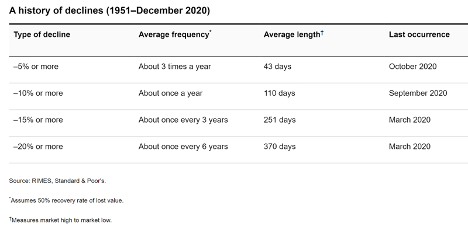
At times like these, it’s important to put current conditions into perspective. This is not the first time the market has taken a tumble and it won’t be the last. Declines in the Dow Jones Industrial Average are actually fairly regular events. In fact, drops of 10% or more happen about once a year on average[2]:
Ride Out the Uncertainty Storm
It’s important to remember that markets dislike uncertainty. Currently, there is a lot of uncertainty regarding the continued coronavirus pandemic, inflation, interest rate hikes, tensions between Russia and Ukraine, and earnings reports due out for several large technology companies.
With so much uncertainty, volatility right now is extreme. The VIX, or the market volatility index, is at the highest level in nearly a year.[3] As we get more information, it is likely that day-to-day market fluctuations will decrease.
Play Dead
There’s an old saying that the best thing to do when you meet a bear market is the same as if you were to meet a bear in the woods: play dead. While easier said than done, successful long-term investors know that it’s important to stay calm during a market correction. We don’t know yet whether the coronavirus fears will translate into an official correction, but the risk always exists.
Market volatility has increased in recent years and the media can often make it seem like each episode is worse than the one before. In reality, volatility does not hurt investors, but selling when the market is down will lock in losses.
Remember That Your Portfolio Is Diversified
Fears about inflation, volatility, and market declines are stressful. However, it is important to keep in mind that while the stock market is down, your portfolio is made up of both stocks, bonds, and other assets that are designed to work together to decrease overall losses. It’s important to consider your specific portfolio, investment horizon, and circumstances when reflecting on economic events. If you have questions about your portfolio, get in touch with our office.
Review Your 401(k) and Other Accounts
Now is a good time to take a look at all of your investment accounts, including your 401(k) to make sure it is well diversified. If you have not rebalanced your other investment accounts in the last year, get in touch with our office and we’ll take a look and offer recommendations to minimize potential losses.
Speak With Your Advisor
Whether you’re new to investing or an experienced investor, it’s helpful to consult with an objective third party. Human nature causes us all to act out of emotion when our accounts go down. As an independent firm, we put your best interests first. We seek to serve as a support system for our clients, helping them make informed financial decisions that aren’t driven solely by emotion.
We’re Here for Your Friends and Family
If you have friends or family who need help with their investments, we are happy to offer a complimentary portfolio review and recommendations. We can discuss what is appropriate for their immediate needs and long-term objectives. Sometimes simply speaking with a financial advisor may help investors feel more confident and less concerned with the day-to-day market activity.
To get started, reach out to us at (301) 798-5250 or schedule a phone call now.
About Jay
Jay Shareef is vice president, financial advisor, federal benefits consultant, and co-founder at WealthFlow Financial. As a U.S. Army veteran, Jay is passionate about helping federal employees create a bulletproof plan for retirement and navigate the often confusing and complicated federal benefits landscape. He spends his days educating and providing clients with unbiased insurance benefits and retirement strategies to help his clients create guaranteed income for life. As a problem-solver and trustworthy resource, Jay always puts his clients and their needs first so they can find financial peace of mind. To learn more about Jay, connect with him on LinkedIn.
About Chris
Chris Rhoads is a co-founder and vice president of WealthFlow Financial. As a registered investment advisor and independent financial professional, Chris is committed to helping his clients in retirement and he takes a holistic approach to financial planning that includes insurance and risk management, investments and wealth management, retirement income planning, and estate and tax planning. Chris has been married to his wife, Tia, since 2009 and they live in Frederick, MD, together with their two young daughters. In his free time, Chris enjoys traveling, watching sports, and being active in causes about which he cares passionately. To learn more about Chris, connect with him on LinkedIn.
[1] https://abcnews.go.com/Business/wireStory/fed-signal-rate-hike-launches-risky-inflation-fight-82442509
[2] https://www.capitalgroup.com/individual/planning/market-fluctuations/past-market-declines.html
[3] https://seekingalpha.com/news/3790661-sp-500-etfs-fall-as-the-vix-crosses-above-32